

The prophets wrote from a world falling apart. They lived through political upheaval, economic injustice, corruption, violence, and communities that had grown accustomed to both suffering and complacency. They spoke uncomfortable truths, exposing the gap between the society their communities had become and the one they were called to build.
The prophets remind us that change begins with honest reflection. We must try to understand the world as it is while also holding on to the belief that our human experience is capable of moving toward a more just world.
In the month of Elul, we take stock of our relationships, our behaviors, and the choices that shaped us in the past year. In the spirit of the prophets, we ask ourselves hard questions:
Over the coming weeks, we’ll explore readings for Elul from our Haftarah Project—the words of prophets Micah, Jeremiah, and Amos—alongside contemporary voices and questions for reflection. We invite you to listen deeply to these ancient texts and consider what they ask of us today as we begin the work of return.
Table of Contents
 Week 1: What has wearied you this year?
Micah 6:1-8
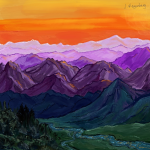
Before the simple yet profound charge to “to do justice, love mercy, and walk humbly with God,” God makes a remarkable request: “My people, what have I done to you? How have I wearied you? Answer me.” God invites the people to share what has made them weary, and literal mountains are called to bear witness to their testimony.
The image of tiny humans laying bare the brief, fragile, and finite burdens of human life before mountains that have stood for millennia feels almost absurd.
Yet there is also something beautiful about bringing the weariness of the human heart into conversation with a presence of incomprehensible immensity. As Elul begins, what would it mean for the bruised, tired, questioning self to invite an encounter with that which bears the imprint of eternity, however absurd it may seem?
—Rabbi Healy Slakman
 Week 2: What does “turning outward” look like?
Jeremiah 7:1-7
We often talk at Temple Micah about “turning outward.” Jeremiah 7 gives us Torah’s clearest expressions of this idea. Jeremiah, who began his prophetic work at the end of the 7th century BCE, warns us: do not confuse worship with being a moral person.
Jeremiah’s message is an important one for this season. Holiness is not measured by how frequently we pray, but by what we actually do. Holiness is measured in how we treat the stranger, the orphan, and the widow—the people that society is most likely to overlook.
To be sure, prayer can be genuine. Prayer can be a balm. It can be a way to say our hopes out loud, a way to find inner strength.
But then what? Prayer must not end when we leave the sanctuary. We can’t hand our sorrow over to God and walk away from our responsibility. Our hands are God’s hands.
If we pray for justice, we should act to bring justice closer. If we pray for healing, we should ask whose wounds we can help tend. And if we pray for peace, we should think about what part we might play in bringing more of it into the world—even if our efforts feel like barely a footnote in the long arc of human history. The important thing is to act.
—Rabbi Josh Beraha
 Week 3: Let justice well up like water
Amos 5:21-24
Amos speaks from a kingdom at the height of its material prosperity, as the gap between the rich and the poor widens. The people in power are surrounded by overabundance, corruption, and iniquity, causing their worship to become hollow.
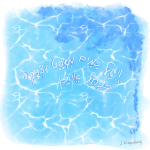
Amos says: Enough! God does not want those perfunctory offerings. The men in control have separated what happens between them and God from what happens between one another. Justice is a divine concern. The covenant is a relationship of mutual obligation and mutual care, and God will not accept devotion that asks for God’s attention while ignoring the suffering of God’s people. Instead: “Let justice well up like water, and righteousness like an unfailing stream.”
Why water? Water runs through the biblical imagination as a source of nourishment and life. Miriam’s death leaves the Israelites without water (Numbers 20); when the covenant is upheld, rain falls and the earth flourishes (Deuteronomy 11); Isaiah imagines the righteous as a watered garden, a spring whose waters never fail (Isaiah 58).
Water also carries a force beyond human control. It can both destroy civilizations and sustain a garden that lets a seed become nourishment. Amos’ imagery suggests that justice belongs to this same deep order of creation. It can, and should, move as naturally and insistently as water through the earth.
Let it flow.
—Rabbi Kelly Whitehead
 Week 4: Contributing to the greater whole
Jeremiah 22:1-5, 13-16
In this text, Jeremiah speaks to the king, the person with the most privilege in the land, reminding him that his opulent surroundings do not translate into morality. A beautiful palace is simply that: a beautiful palace. A beautiful palace does not mean that the inhabitants of the land will be governed by the values of truth, beauty, or equality.
Jeremiah’s message is equally true for those of us who nonetheless live in beautiful homes, furnished with intention. Beautiful material surroundings do not equate to the inner beauty that comes from acting with righteousness. Leaders or not, we must all take action to avoid letting beautiful environs inflate our sense of moral character.
This Elul, we are reminded that the High Holy Day season is not only about our actions that we individually take toward justice, but also about how we contribute to the greater whole. While the king in Jeremiah’s time was a representative of God, our leaders are democratically elected. They have responsibilities to us, and we to them.
This Elul, we are challenged to step outside of our self-image as righteous people because we vote in the “right way” or complain with like-minded friends about the wrongs we see in the world. Despite its moral correctness, these behaviors and attitudes too often contribute to our national atmosphere of polarization.
This season, we ask ourselves the hard questions. How do we amplify Jeremiah’s call to those who need to hear it? How do we make it real with our own actions?
—Rabbi Samantha Frank
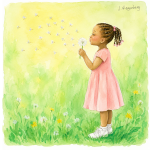
Thank you to member Jessie Regunberg for sharing her artwork with us for this project.