

By Rabbi Healy Slakman
On a cold, dark December night in Brooklyn in 2022, I found myself running all over town, from grocery store to grocery store, restaurant to restaurant, searching for an ingredient I never could have predicted I would urgently need: nopales—fresh cactus paddles. I had a pot of nopales chicken soup to make, and friends coming over to taste and be warmed by a stranger’s family recipe.
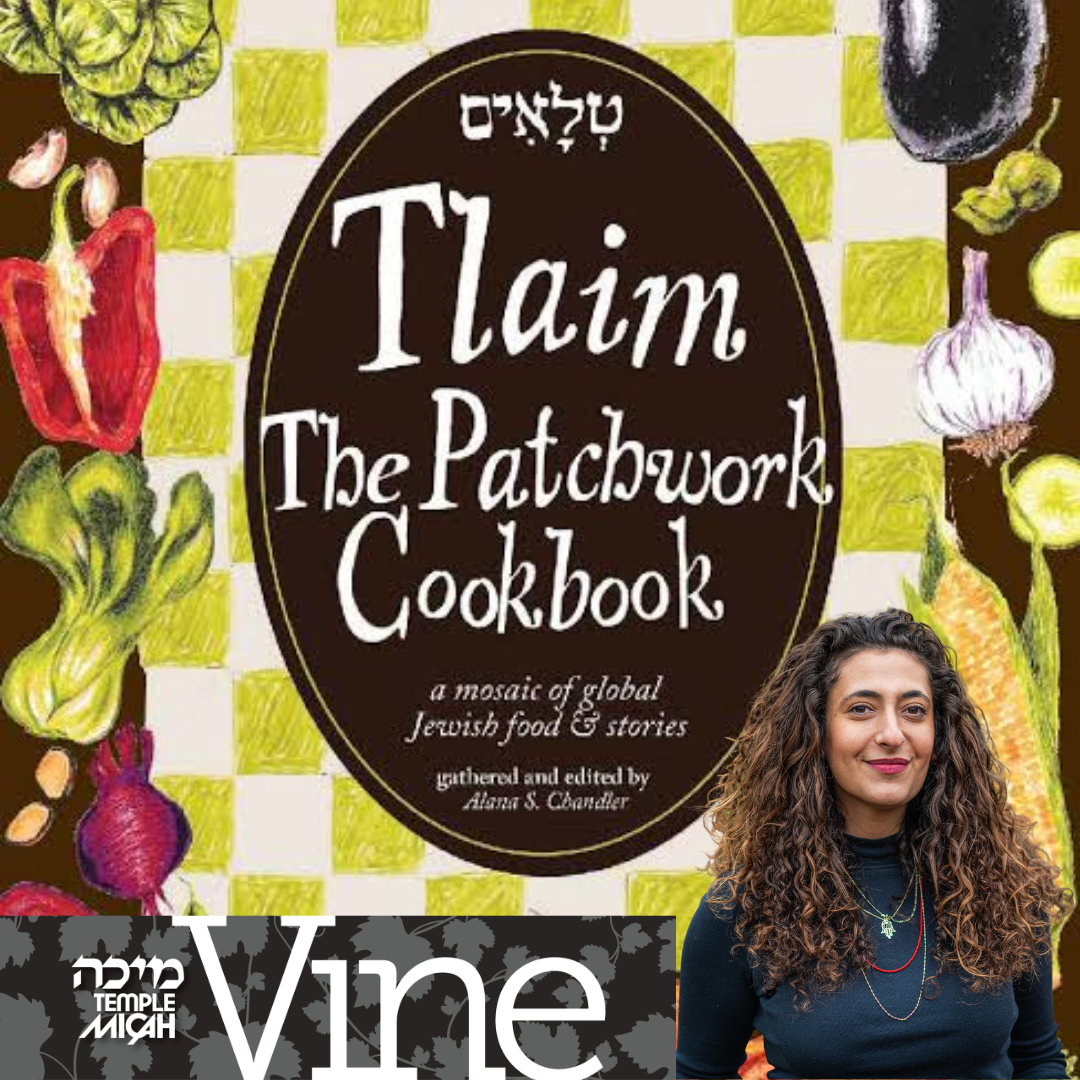
That winter, and periodically over the years that followed, I found myself testing recipes and participating in the creation of a grassroots community cookbook that celebrates the ethnic and racial diversity of the Jewish people. This year, I am excited to share that the Tlaim Patchwork Cookbook, gathered and edited by Alana Chandler, is finally finished and available. Tlaim takes its name from the Hebrew word for “patchwork,” reflecting the more than 80 recipes and stories woven together from Jewish communities around the world. Through dishes rooted in family memory, migration, holiday practice, and everyday life, each recipe serves not only as a set of instructions, but as a doorway into the lived experiences, histories, and traditions of its contributor.
I have a passion for cookbooks, and I see Jewish cookbooks as living cultural artifacts—a genre of Jewish literature in their own right. When studied, they tell the ever-evolving story of Jewish identity: where we have lived, what we have carried with us, how we have adapted, and how we have nurtured and sustained one generation to the next. They reveal how Jewish communities have been shaped by surrounding cultures while also preserving particular traditions, tastes, and practices—and what those choices say about what we value. And recipes have a remarkable ability to make visible histories and identities that dominant narratives too often obscure.
The Tlaim does just this: uplifts recipes, stories, and traditions of Jews from all kinds of backgrounds whose lived experiences have always been—and continue to be—an integral part of the Jewish story. There is no single “Jews of Color” identity contained within these pages. Each recipe reflects radically different backgrounds, histories, cultures, and relationships to Jewishness. So many of the contributors hold multiple identities at once—Jewish and something else, and often many something elses. And the recipes are all the more delicious, celebratory, and deep as ingredients, traditions, and practices from different parts of a person’s identity come together in a single dish.
In this sense, the recipes tell not only the stories of historically underrepresented Jewish identities, but a much larger Jewish story. Jewish life has never been culturally singular. We have always crossed borders, adapted traditions, shifted practices, and absorbed new flavors. Our communities, stories, and identities are richer for it.
I hope you’ll acquire a copy of the cookbook and make it part of your own kitchen—stain its pages with ingredients, scribble your adaptations in the margins, and add another layer to the living story these recipes carry. You can purchase a printed copy or download a free virtual copy and begin cooking from there! Find recipes I contributed, including the nopales chicken soup, Sambusak bel Jeben, Yusheng with Lox, Japanese charoset, and many more.
May the recipes and stories in this book inspire us to recognize, uplift, and celebrate the ethnic and racial diversity of Jewish people—and to see the Jewish story in all of its dynamic fullness. I hope you will try some and let me know which ones you like!
| Tunisian Croquettes (Banatage)
Growing up, I visited my grandmother every summer. I remember talking about her banatage on the plane ride over, wondering if she would make them– secretly knowing very well that she would. She always did, even though they are traditionally prepared on Passover, because she wanted to treat us and celebrate the special occasion of our visit, even if it meant standing over the stove for hours, in the 100 degree heat of July in Ramle, with no air-conditioning, deep frying. Yields about 18 banatage Ingredients: Potato Exterior: 5 potatoes 2 tablespoons oil 1 teaspoon consommé 1 teaspoon turmeric Salt and pepper to taste
Mushroom Filling: 1-2 tablespoons olive oil 1 onion, diced 1 tsp vinegar 1 tsp sugar 16 oz mushrooms, finely chopped 1 tsp paprika 1 tablespoon consommé 1 bunch of parsley, finely chopped Salt and pepper to taste
Frying: Matzo meal* 3 eggs Vegetable oil
Procedure: Preparing ingredients
Assembly and Frying:
*Banatage can be cooked all year long. If it’s not Passover, I suggest coating with all purpose flour instead of matzo meal |
This article originally appeared in the Sep/Oct/Nov 2026 issue of the Vine.
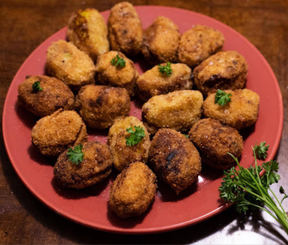 Banatage are deep fried, breaded, stuffed, croquette-esque potato balls that epitomize North African comfort food. While they are usually filled with meat, my version calls for a spiced mushroom mixture. You can also omit the mushroom mixture and experiment with the usual vegetarian substitution of chopped hard boiled eggs!